Korean dishes explained
Kimbap vs sushi: the real differences in rice, fillings and flavor
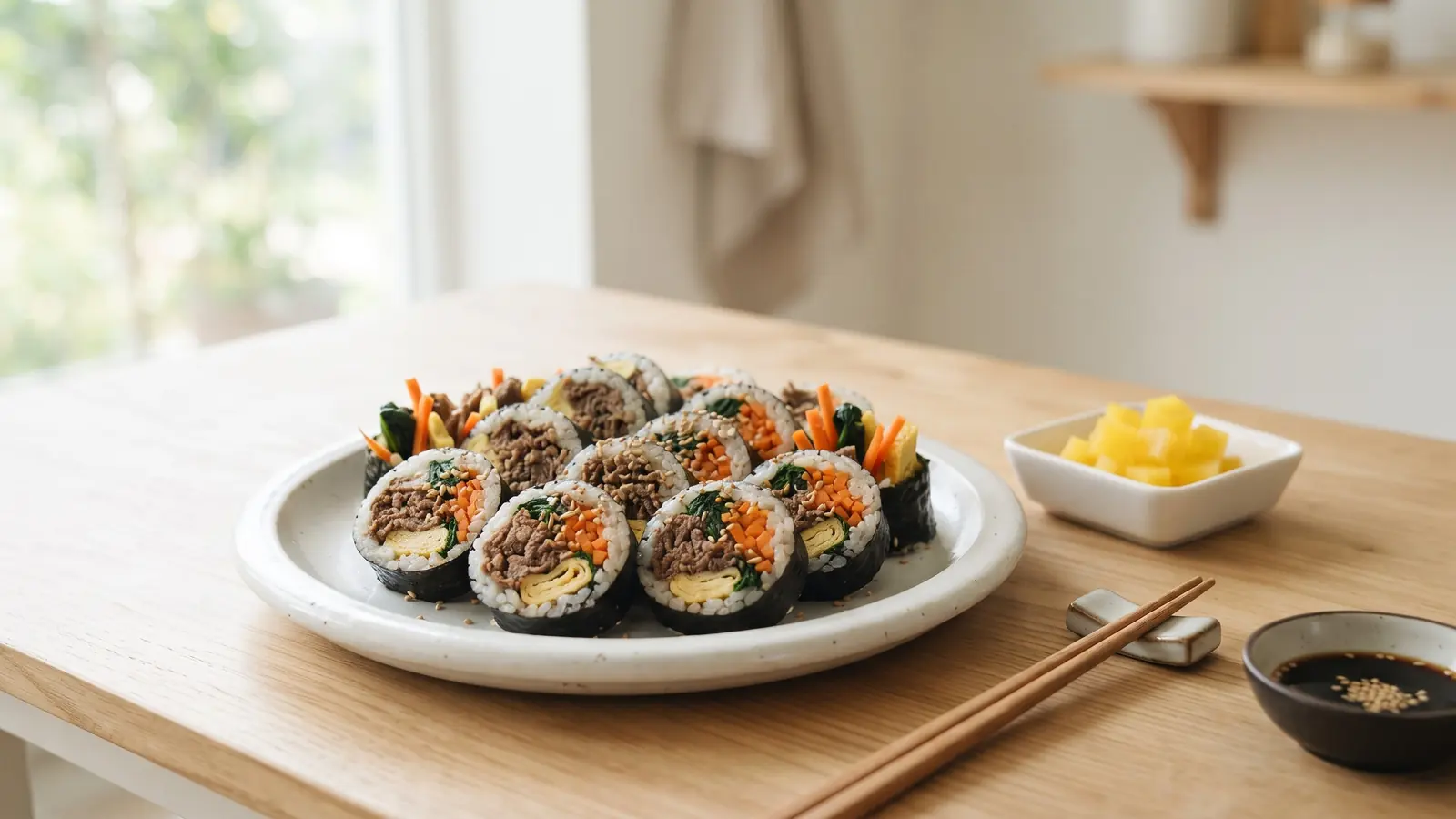
Kimbap vs sushi comes down to rice seasoning, fillings and sauces. Kimbap uses sesame oil and cooked fillings, sushi uses vinegared rice and often raw fish.
Plain-English explainers for the Korean and Japanese-style dishes sold at K-Deli in Tampa, from kimbap and tteokbokki to bibimbap and onigiri.
Korean dishes explained
Kimbap vs sushi comes down to rice seasoning, fillings and sauces. Kimbap uses sesame oil and cooked fillings, sushi uses vinegared rice and often raw fish.
Korean dishes explained
Kimbap is a Korean rice roll wrapped in seaweed with egg, vegetables and a protein, then sliced into rounds. Learn how it is made, filled and eaten.
Korean dishes explained
Bibimbap is a Korean rice bowl topped with seasoned vegetables, egg and meat, then mixed with gochujang. Learn the toppings, how to mix it and common types.
Korean dishes explained
Tteokbokki is a Korean street food of chewy rice cakes in a sweet, spicy red sauce. Learn how it tastes, how hot it gets, what goes in it and how to order it.