Short answer
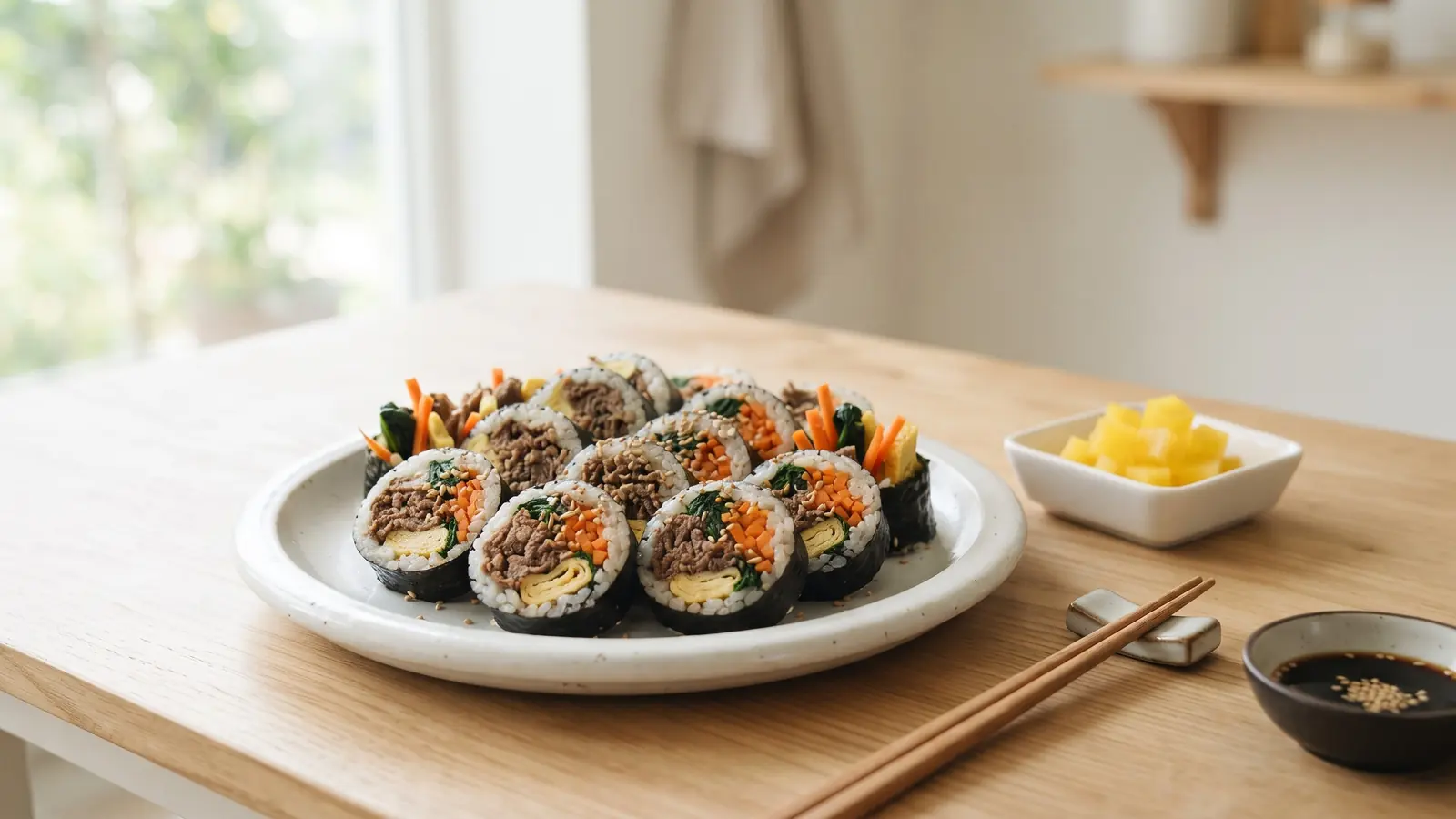
Kimbap is a Korean roll of cooked rice and fillings such as egg, carrot, spinach, pickled radish and meat, wrapped in dried seaweed (gim) and cut into bite-size slices. The rice is seasoned with sesame oil, not sweet vinegar.
Kimbap is a Korean roll of cooked rice and fillings such as egg, carrot, spinach, pickled radish and meat, wrapped in dried seaweed and sliced into bite-size rounds. Anyone wondering what is kimbap should picture a lunchbox classic that is eaten at room temperature, seasoned with sesame oil and salt.
What does kimbap mean?
Kimbap means seaweed rice. Gim is the Korean word for dried seaweed (laver) and bap means cooked rice, so the name describes the roll literally.
You will see the dish spelled gimbap, kimbap, kimbab and kimbop. All of them are romanizations of the same Korean word. Kimbap is a common everyday food in Korea, eaten at picnics, school trips and as a quick meal.
What is in kimbap?
Kimbap holds rice and a row of fillings laid along the length of a sheet of gim. The classic set is egg, carrot, spinach, pickled yellow radish and a protein, often with imitation crab or fish cake.
| Filling | Role | Notes |
|---|---|---|
| Egg | Soft, mild | Cooked as a thin omelet and cut into strips |
| Carrot | Sweetness and color | Julienned and lightly sauteed |
| Spinach | Greenery | Blanched and seasoned with sesame oil |
| Yellow pickled radish (danmuji) | Tangy crunch | Bright yellow, sweet and sour |
| Imitation crab | Mild seafood flavor | Often called crab stick |
| Beef, chicken or tuna mayo | Protein | Varies by roll |
How is kimbap made?
Kimbap is made by spreading warm rice over a sheet of gim, laying fillings in a line, rolling tightly with a bamboo mat, brushing the roll with sesame oil and slicing it. The skill lies in a tight roll and a sharp knife.
- Mix warm cooked rice with sesame oil and a little salt.
- Place a sheet of gim on a bamboo mat, shiny side down.
- Spread a thin layer of rice, leaving a strip bare at the far edge.
- Lay the fillings in a row across the center of the rice.
- Roll tightly from the near edge, pressing as you go.
- Brush with sesame oil and sprinkle with sesame seeds.
- Slice with a sharp, slightly wet knife into rounds about a finger thick.
How is kimbap seasoned?
Kimbap rice is seasoned with sesame oil and salt, and sometimes a little sesame seed. It does not usually contain the sweet vinegar mixture used for Japanese sushi rice.
This is one of the main differences from sushi. The roll tastes nutty and savory rather than tangy. Some cooks add a pinch of sugar, but sesame oil is the signature note.
How do you eat kimbap?
Kimbap is eaten by hand or with chopsticks, one slice at a time, often with kimchi or pickled radish on the side. No dipping sauce is required because the roll is already seasoned.
Kimbap pairs well with tteokbokki, fish cake soup or ramyun, and many people order it as a mild partner to something spicy. In Korea it is also a standard picnic food because it travels well.
What are the common types of kimbap?
Common types include classic kimbap with egg and vegetables, tuna mayo, chicken mayo, kimchi, cheese and fried versions. Each changes the main filling while keeping the same rice and seaweed wrapper.
- Classic or beef kimbap: egg, vegetables and seasoned beef.
- Tuna kimbap (chamchi): canned tuna mixed with mayonnaise.
- Kimchi kimbap: stir-fried kimchi as the lead filling.
- Vegetable kimbap: egg and vegetables with no meat.
- Cheese kimbap: cheese slices added for creaminess.
- Chungmu kimbap: a small rice roll from the south coast, served with spicy squid and radish.
Where does kimbap come from?
Kimbap is a Korean dish, and its history is disputed. Some writers trace it to the Japanese rolled sushi that was known in Korea in the early twentieth century, while others point to older Korean seaweed and rice wraps, and the debate is not settled.
What is not disputed is that kimbap developed its own character. The rice is seasoned with sesame oil, the fillings are cooked and the roll is eaten as everyday food, not as a restaurant specialty. It is now one of the best known Korean foods worldwide.
How do you cut and slice kimbap neatly?
Kimbap is cut with a very sharp knife, wiped or oiled between cuts, using a gentle sawing motion rather than pressing down. A dull or dry knife squashes the roll and smears the rice.
- Rest the finished roll for a minute so it holds its shape.
- Brush the knife blade lightly with sesame oil or wipe it with a damp cloth.
- Slice with a light back and forth motion.
- Cut rounds about one finger wide, and trim the uneven ends, which cooks often eat as a snack.
What goes with kimbap?
Kimbap goes well with soups, spicy rice cakes and pickles, which supply moisture and contrast. The roll is mild, so people pair it with something hot, sour or brothy.
| Side | Why it works |
|---|---|
| Tteokbokki | Spicy sauce against mild rice |
| Fish cake soup | Warm broth to balance a dry roll |
| Ramyun | Hot noodles with a cool roll |
| Kimchi | Sour crunch |
| Pickled radish | Sweet and tangy |
Which kimbap does K-Deli list?
K-Deli lists a dozen kimbap rolls on its Uber Eats page, and the Bulgogi Beef Kimbab is named among its most popular items. Prices are as shown there in November 2026.
| Roll | Price | Listing |
|---|---|---|
| Bulgogi Beef Kimbab | $13.95 | Sweet marinated beef, egg, carrot, spinach, imitation crab and pickled radish |
| Shrimp Tempura Kimbap | $14.95 | Crisp fried shrimp |
| Tuna Mayo Kimbab | $12.95 | Canned tuna in mayonnaise with the usual vegetables |
| Vegetable Kimbab | $12.95 | Vegetables, egg and pickled radish |
| Kimchi Kimbab | $12.95 | Stir-fried kimchi, egg, vegetables |
| Unagi Kimbop | $15.95 | Broiled eel and vegetables |
The page also lists Chicken Mayo, Egg, Spicy Fish Cake, Cream Cheese Tempura Shrimp, Double Cream Cheese Vegetable and a Pickled Plum Vegetable Roll. The same menu calls kimbap the dish the shop is best known for. This guide is independent. See the menu page for the full recorded list and the hours and location page for opening times.
How is kimbap different from sushi and onigiri?
Kimbap differs from sushi in its rice seasoning and fillings, and from onigiri in its shape. Kimbap is a sliced roll with cooked fillings, sushi uses vinegared rice, and onigiri is a hand-shaped rice ball or triangle.
Kimbap, sushi maki and onigiri all use seaweed and rice but come from different traditions, Korean and Japanese. They are similar enough to be confused and different enough to taste unlike each other.
Common questions
How do you pronounce kimbap?
Kimbap is pronounced roughly kim-bap, with a short a like in the word cap. It is also spelled gimbap, kimbab or kimbob, which all come from the same Korean word.
Is kimbap served hot or cold?
Kimbap is usually served at room temperature or cool, often as a packed lunch. It can be pan-fried in egg batter, which makes it a hot dish, but the standard roll is not heated.
How long does kimbap keep?
Kimbap is best the day it is made, as the rice hardens in the fridge. Keep it wrapped at cool room temperature for a few hours or refrigerate it briefly, and follow food safety advice for rice and fillings.
What is the difference between kimbap and a California roll?
A California roll is a Japanese-American inside-out roll with sushi rice. Kimbap has seaweed on the outside and rice seasoned with sesame oil and salt, and its fillings are usually cooked ingredients such as egg and vegetables.
Why is kimbap brushed with sesame oil?
Sesame oil gives the roll a toasted aroma and keeps the seaweed from sticking and drying out. It is brushed on the outside right after rolling, often with a sprinkle of sesame seeds.
Everything practical is on the home page: K-DELI hours, menu and directions.
This article is general information from an independent guide, not from K-DELI itself. For the store’s current details see hours and location.