Short answer
Kimbap is a Korean roll with rice seasoned with sesame oil and salt and cooked fillings such as egg and vegetables, eaten without a dipping sauce. Sushi is Japanese, uses rice seasoned with vinegar and sugar, often has raw fish, and is dipped in soy sauce.
Kimbap vs sushi is a question of seasoning and fillings: kimbap uses rice seasoned with sesame oil and salt, cooked fillings like egg and vegetables, and no dipping sauce, while sushi uses rice seasoned with vinegar and sugar, often has raw fish, and is dipped in soy sauce. Both are rice and seaweed foods, from Korea and Japan.
What is the main difference between kimbap and sushi?
The main difference is the rice. Kimbap rice is seasoned with sesame oil and a little salt, so it tastes nutty and savory, while sushi rice is seasoned with a mix of rice vinegar, sugar and salt, so it tastes lightly sour and sweet.
That single choice changes everything else. A tangy, sticky rice suits raw fish and a dab of wasabi. A toasted, oily rice suits cooked vegetables, egg and seasoned meat. The two dishes were developed for different tastes, not just with different names.
Kimbap vs sushi: side by side
At a glance, kimbap and sushi differ in origin, rice, fillings, dipping sauce and role in a meal.
| Feature | Kimbap | Sushi (maki) |
|---|---|---|
| Country | Korea | Japan |
| Rice seasoning | Sesame oil and salt | Rice vinegar, sugar and salt |
| Typical fillings | Egg, carrot, spinach, pickled radish, imitation crab, beef | Raw or cooked fish, cucumber, avocado, egg |
| Raw fish | Rare | Common |
| Dipping sauce | None | Soy sauce, wasabi, ginger |
| Seaweed | Gim, often brushed with sesame oil | Nori |
| Slice size | Thicker, bite-size rounds | Smaller rounds |
| Role | Everyday lunch, picnic food | Restaurant dish or special meal |
How is the rice different in kimbap and sushi?
Kimbap rice is mixed with sesame oil and salt while warm, and sushi rice is mixed with seasoned vinegar. The grain is short and sticky in both cases, but the flavor is very different.
Sushi chefs treat rice as the center of the dish and fan it as it cools so it stays glossy. Kimbap cooks usually season the rice more quickly and leave it just warm. The oil also keeps the rice from sticking to the seaweed and hands.
How are the fillings different?
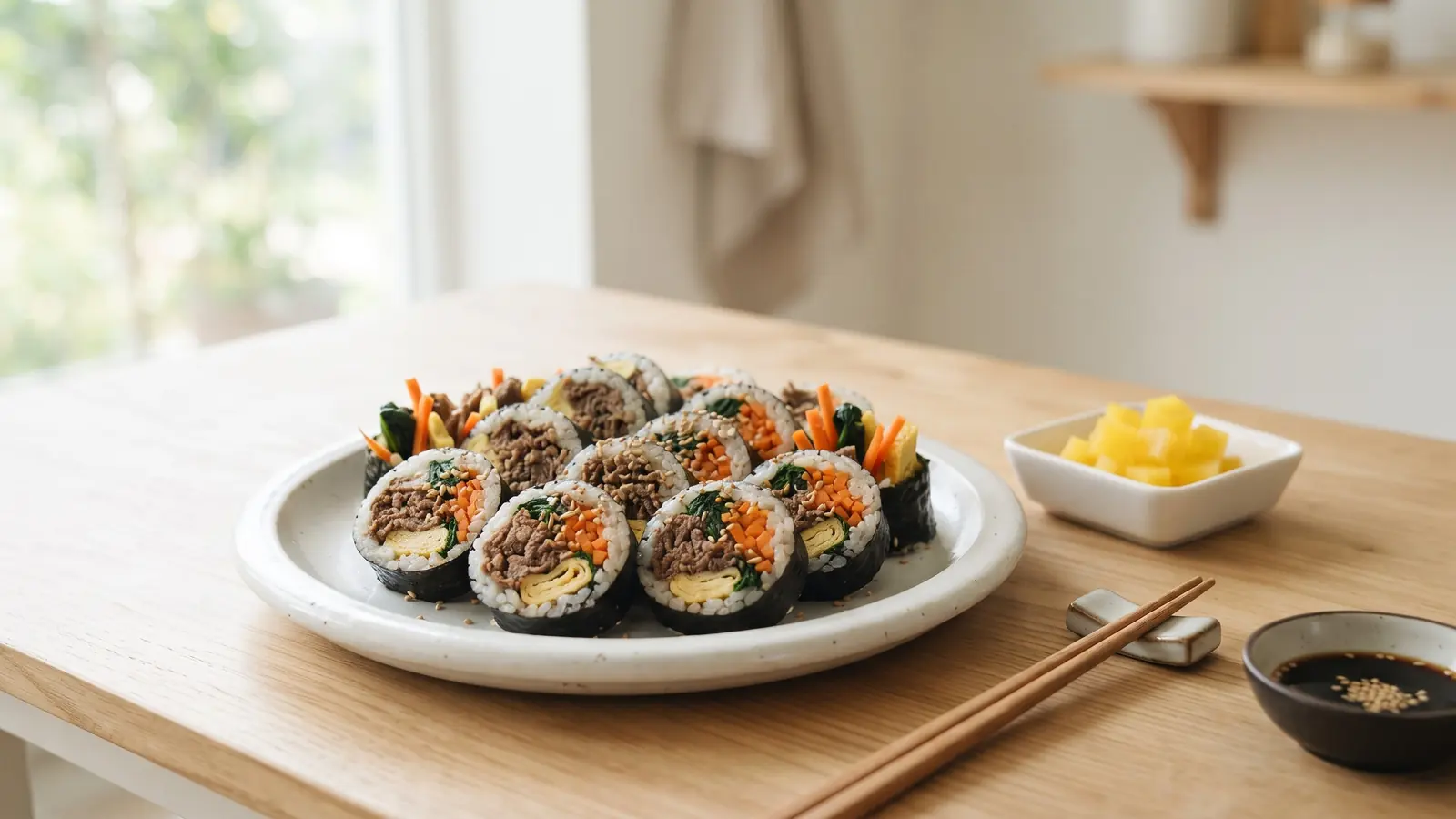
Kimbap fillings are mostly cooked and colorful: egg, carrot, spinach, pickled yellow radish and a protein. Sushi fillings depend on the style and often include raw fish, though cucumber, avocado and egg rolls are also common.
- Kimbap: egg strips, julienned carrot, seasoned spinach, danmuji pickled radish, imitation crab, bulgogi, tuna mayo, kimchi.
- Sushi maki: tuna, salmon, cucumber, avocado, pickled radish in futomaki, and egg in tamago rolls.
- Overlap: shrimp tempura, eel, cooked egg, cucumber and crab sticks appear in both.
The idea of a colorful cross section is shared, but a kimbap slice often shows four or five strips of ingredients, while a simple sushi roll may show one or two.
How is each one eaten?
Kimbap is eaten as is, by hand or with chopsticks, with pickles or kimchi on the side. Sushi is dipped lightly in soy sauce, often with wasabi and pickled ginger between bites.
Dipping kimbap is not the tradition, because the roll is seasoned inside. Kimbap is a casual food for lunchboxes, picnics and quick meals. Sushi is more often a restaurant or special occasion meal, though supermarket sushi is also everyday food in Japan.
Which came first, kimbap or sushi?
Sushi has a much longer documented history, and kimbap’s relationship to Japanese rolls is debated. Some writers argue kimbap grew from Japanese rolled sushi known in Korea in the early twentieth century, while others point to older Korean seaweed and rice wraps.
Because the evidence is mixed, it is safest to say that the two dishes are related in form and different in character. What is certain is that kimbap became its own everyday Korean food, with seasoning and fillings that do not follow Japanese sushi rules.
What do the seaweed wrappers look like?
Kimbap uses gim, Korean seaweed, and sushi uses nori, Japanese seaweed. Both are sheets of dried laver, and the sheets used for rolls are similar in size and look, so the wrapper is rarely the way to tell the dishes apart.
The difference is in the finish. Cooks often brush the outside of a kimbap roll with sesame oil and sprinkle it with sesame seeds, which gives the surface a glossy, toasted look. A sushi roll is usually left plain, or the rice is on the outside in an inside-out roll, with sesame seeds or fish roe on the rice.
How are the slices different?
Kimbap is usually cut into thicker rounds, about a finger wide, while maki sushi is often cut into smaller pieces, six or eight to a roll. The thicker cut suits the many fillings and the casual way kimbap is eaten.
Thick kimbap slices stay together better when picked up with fingers or chopsticks, and they are easy to pack in a lunchbox. Sushi pieces are sized for a single bite after dipping.
Are kimbap and sushi roll names confusing?
Yes, because American menus use sushi roll names for kimbap, and kimbap shops use names borrowed from Japan. Gimbap, kimbab and kimbop are all spellings of the same Korean word.
If a roll is described with egg, spinach, carrot and pickled radish, it is kimbap. If it is described with raw fish, avocado and tobiko, it is sushi. Cross-over rolls such as shrimp tempura and cream cheese blur the line, and the shop’s own label settles it.
Does K-Deli sell kimbap or sushi?
K-Deli sells kimbap and does not list sushi. Its Uber Eats page, as of November 2026, shows twelve kimbap rolls and describes kimbap as the dish the shop is best known for.
The Bulgogi Beef Kimbab is $13.95, the Tuna Mayo Kimbab is $12.95, and the Shrimp Tempura Kimbap is $14.95. The Unagi Kimbop at $15.95 has broiled eel, which is cooked. A related Japanese-style item, the Egg Musubi, is $6.99. See the menu page for the recorded list and the hours and location page for when the shop is open. This guide is independent and takes no orders.
Which should you pick, kimbap or sushi?
Pick kimbap if you want a nutty, savory roll with cooked fillings, and pick sushi if you want vinegared rice with fish. Neither is better in general, because they are different foods with different jobs.
A simple rule: for a packed lunch or a mild partner to spicy tteokbokki, kimbap fits. For a sit-down meal built around fish, sushi fits. Allergies matter for both, so ask about sesame, egg, shellfish and soy.
Common questions
Is kimbap just Korean sushi?
Not exactly. Kimbap and sushi rolls share the idea of rice and seaweed, but kimbap rice is seasoned with sesame oil, the fillings are mostly cooked, and the roll is not dipped in sauce. Many Koreans see it as a separate dish.
Does kimbap contain raw fish?
Usually no. Standard kimbap uses cooked or cured fillings such as egg, vegetables, pickled radish, imitation crab, fish cake or seasoned meat. Some modern rolls use tempura shrimp or broiled eel, which are cooked.
Can you dip kimbap in soy sauce?
You can, but it is not the tradition. Kimbap is already seasoned through the rice and fillings, so adding soy sauce can make it too salty. Many people eat it plain or with pickled radish and kimchi.
Which is easier to make at home, kimbap or sushi?
Kimbap is generally easier, because no vinegared rice mixture and no raw fish are needed. You season warm rice with sesame oil and salt, cook the fillings and roll. A bamboo mat helps but is not essential.
Is kimbap eaten hot or cold?
Kimbap is eaten at room temperature or cool, the same as most rolled sushi. The difference is that kimbap is a regular packed lunch, and it can be fried in egg batter for a hot version.
This page is part of the independent guide to K-DELI, which has the address, hours and menu.
This article is general information from an independent guide, not from K-DELI itself. For the store’s current details see hours and location.