Short answer
Tteokbokki is a Korean dish of chewy cylinder-shaped rice cakes simmered in a sweet and spicy sauce made with gochujang, the red chili paste. It is usually cooked with fish cake and scallions, and it is one of the most popular street foods in Korea.
Tteokbokki is a Korean dish of chewy, cylinder-shaped rice cakes simmered in a sweet and spicy red sauce, and anyone asking what is tteokbokki can think of it as a national snack of Korea. The rice cakes are cooked with fish cake and scallions, and the sauce is built on gochujang, a fermented red chili paste.
What is tteokbokki made of?
Tteokbokki is made of rice cakes (tteok), gochujang chili paste, gochugaru chili flakes, sugar, soy sauce and a savory stock, usually with fish cake and scallions added. The rice cakes give the dish its chew, and the sauce gives it a deep red color.
The core ingredients in a typical bowl are:
- Garaetteok: long, firm rice cakes cut into short cylinders, made from rice flour and water.
- Gochujang: a thick paste of chili, fermented soybeans and rice, which gives sweet heat.
- Gochugaru: coarse Korean chili flakes that add color and a cleaner heat.
- Eomuk: flat sheets of fish cake, folded or cut into strips.
- Stock: often made from dried anchovies and kelp, which gives the sauce its savory base.
- Scallions and sometimes cabbage or boiled egg: for freshness and bulk.
What does tteokbokki taste like?
Tteokbokki tastes sweet first, then savory, then hot. The sauce is sticky and slightly sugary, with the fermented depth of gochujang, and the rice cakes are soft on the outside and springy in the middle.
The texture matters as much as the flavor. Korean cooks describe the ideal chew with the word jjolgit, a pleasant resistance when you bite. The fish cake is softer and a little salty, so each spoonful mixes chewy, soft and saucy parts.
How spicy is tteokbokki?
Classic red tteokbokki is medium to hot, and the heat builds as you eat. Spice levels vary a great deal between kitchens, so the same dish can be mild at one shop and fiery at another.
| Style | Sauce | Heat | Typical extras |
|---|---|---|---|
| Classic red | Gochujang and gochugaru | Medium to hot | Fish cake, scallion, egg |
| Rose | Gochujang with cream or milk | Mild to medium | Fish cake, cheese |
| Cheese | Red sauce topped with melted cheese | Medium, softened by cheese | Mozzarella style cheese |
| Gungjung (royal court) | Soy sauce and sesame oil | None | Beef, mushrooms, vegetables |
Where does tteokbokki come from?
Tteokbokki is a Korean dish with a long history as a soy sauce based royal court food, and the red chili version most people know today became popular in the 1950s and 1960s. The red version is often credited to street vendors in Seoul, though accounts differ.
Before gochujang was used, the dish was savory and soy flavored, and that older form is still cooked as gungjung tteokbokki. The red version spread through street stalls and school-gate snack shops, and it is now a staple at markets and food courts across Korea.
How do you eat tteokbokki?
Tteokbokki is eaten hot with chopsticks or a fork, one rice cake at a time, usually from a shared dish. The sauce is thick, so people often scoop extra sauce with a piece of fish cake or mix it with rice.
Common ways to eat it:
- Take a rice cake and a piece of fish cake together for the best balance.
- Dip a boiled egg or fried dumpling in the sauce.
- Stir leftover sauce into a small bowl of rice.
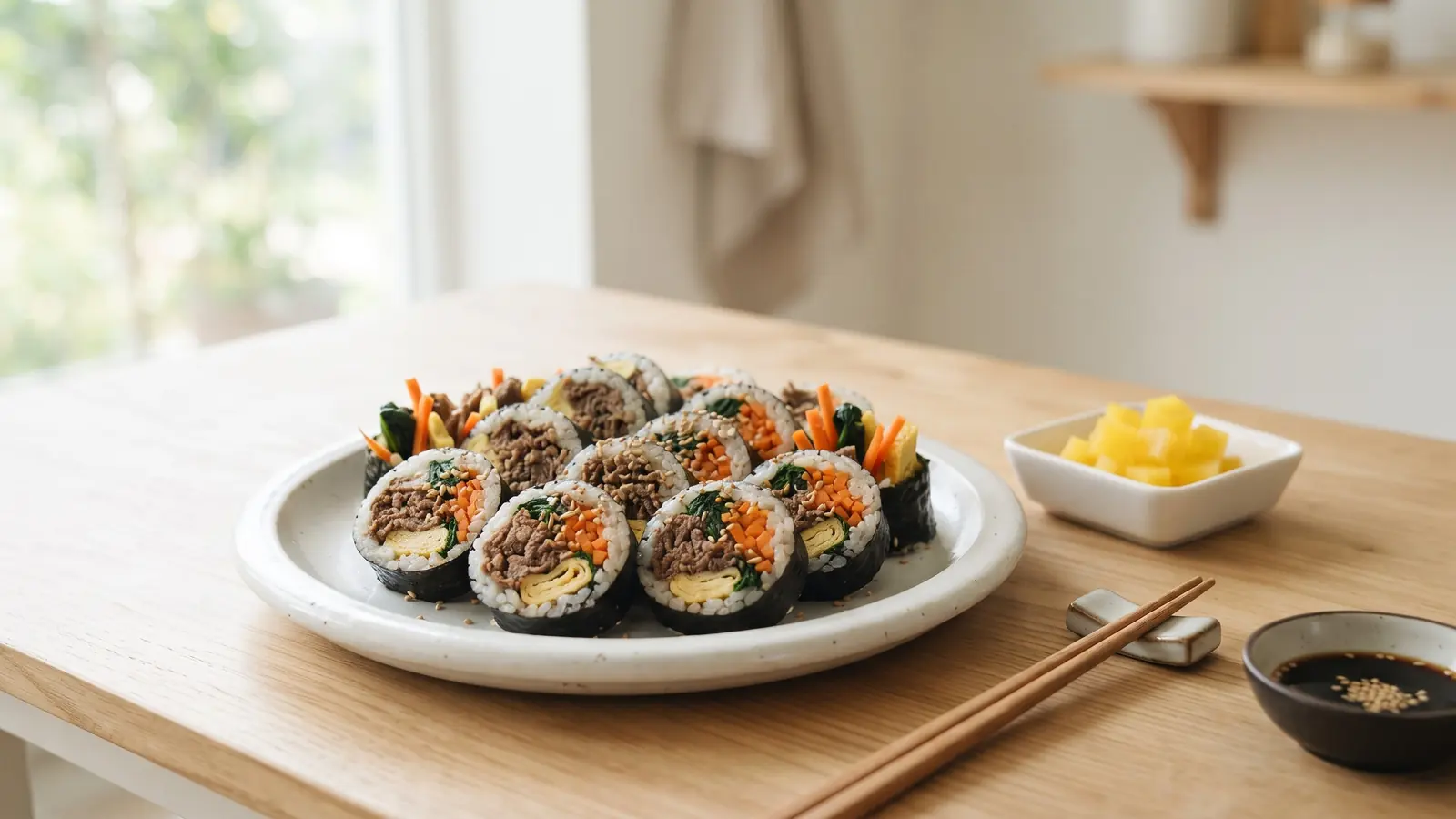
- Cool the heat with a cold drink or a mild side such as kimbap.
What are common add-ons for tteokbokki?
The most common add-ons are boiled eggs, ramen noodles, cheese, dumplings and extra vegetables. Each one changes the dish, either by softening the heat or by turning it into a bigger meal.
- Ramen noodles: the combination is called rabokki, from ramen and tteokbokki.
- Cheese: melts into the sauce and calms the spice.
- Fried dumplings (mandu): soak up the sauce and add crunch.
- Boiled egg: a mild, creamy contrast.
- Cabbage and onion: a little sweetness and crunch.
What kind of rice cakes does tteokbokki use?
Tteokbokki uses tteok made from rice flour, most often garaetteok, a long, thick cylinder that is cut into short pieces. The rice cakes are dense and chewy rather than sweet, which is why they are different from dessert rice cakes.
Shops and home cooks pick from a few shapes:
- Garaetteok (cylinder): the standard choice, firm and bouncy.
- Sliced oval tteok: thinner, cooks faster and is common in soups.
- Rice cakes filled with cheese: a modern variation that melts inside.
- Flour based tteok: made with wheat flour, softer and less springy.
Fresh rice cakes are soft and ready to cook. Refrigerated or hard ones need a short soak in warm water so they cook evenly and do not stay hard in the center.
What is the difference between tteokbokki and rabokki?
Tteokbokki is rice cakes in red sauce, and rabokki is the same dish with ramen noodles added. The name is a blend of ramyun and tteokbokki, and the noodles soak up the sauce and make the dish more filling.
The two dishes share the sauce and the fish cake. Rabokki is usually soupier, because instant noodles release starch into the pot. Some shops add a slice of cheese or a boiled egg on top. Where tteokbokki is a snack, rabokki is often a full meal.
Is tteokbokki street food or restaurant food?
Tteokbokki is both. It is best known as a street food sold at pojangmacha stalls and at school gate snack shops, and it is also served in restaurants, food courts and convenience shops, in small cups or large shared pans.
In Korea it is a standard after school snack and a late night comfort dish. Outside Korea, it appears in Korean restaurants, delis and grocery stores, often alongside kimbap, mandu and fish cake soup.
Is tteokbokki on the K-Deli menu?
Yes. The K-Deli ordering page on Uber Eats lists Tteokbokki at $12.99, described as spicy rice cakes with fish cake and vegetables and marked spicy. It is one of three items shown as most liked on that page, as of November 2026.
The same page lists Rabokki (Ramen and Tteokbokki) at $17.99, which combines tteokbokki with spicy Buldak ramen, and Spicy Chicken and Cheese with Rice Cake at $17.99, described as very hot. The Uber Eats page also says the Tteokbokki is often ordered with the lunch boxes. K-Deli is a small Korean deli in Tampa, and this guide is an independent site that takes no orders. Check the menu page for the recorded list and the hours and location page before you go.
How can you make tteokbokki at home?
You can make tteokbokki at home by simmering rice cakes and fish cake in a sauce of stock, gochujang, gochugaru, sugar and soy sauce for about 10 to 15 minutes, until the sauce thickens. Packaged rice cakes are sold in most Korean and many Asian grocery stores.
- Soak hard rice cakes in warm water for 10 minutes, or use fresh soft ones as they are.
- Bring stock to a simmer and stir in gochujang, gochugaru, sugar and soy sauce.
- Add the rice cakes and fish cake and simmer, stirring so nothing sticks.
- Cook until the sauce is glossy and the rice cakes are soft in the middle.
- Finish with scallions and, if you like, a halved boiled egg.
The K-Deli listing also records a Spicy and Sweet Tteokbokki Kit at $5.99 among the shop items, described as a way to make tteokbokki at home.
Common questions
How do you pronounce tteokbokki?
Tteokbokki is said roughly as tuck-bo-kee. The double t in the spelling marks a tense, sharp consonant at the start, so the first sound is firmer than a normal t. You may also see it written as topokki or ddukbokki.
Are tteokbokki rice cakes the same as Chinese rice cakes?
They are related but not identical. Korean tteok for tteokbokki is a firm, chewy cylinder made from rice flour. Chinese nian gao can be sliced ovals made from a similar dough. Both are chewy and soak up sauce.
Is tteokbokki always spicy?
No. The classic red version is spicy, but a soy sauce version called gungjung tteokbokki is savory and mild, and some shops offer milder sauces. If heat is a concern, ask about the spice level before ordering.
Can you reheat leftover tteokbokki?
Yes, but the rice cakes firm up in the fridge. Warm them gently in a pan with a spoonful of water, stirring until the sauce loosens and the rice cakes soften again. Microwaving also works with a splash of water.
What do you eat with tteokbokki?
Tteokbokki is often eaten with kimbap, fried dumplings called mandu, boiled eggs and fish cake soup. The mild rolls and the broth balance the heat of the red sauce.
This page is part of the independent guide to K-DELI, which has the address, hours and menu.
This article is general information from an independent guide, not from K-DELI itself. For the store’s current details see hours and location.